New Delhi, Aug 11: India’s push to build a stronger domestic telecom manufacturing industry is gaining ground, with the Production Linked Incentive (PLI) scheme for telecom and networking products attracting more than Rs 5,200 crore in investment and generating sales of around Rs 1.1 lakh crore, according to the Department of Telecommunications (DoT).

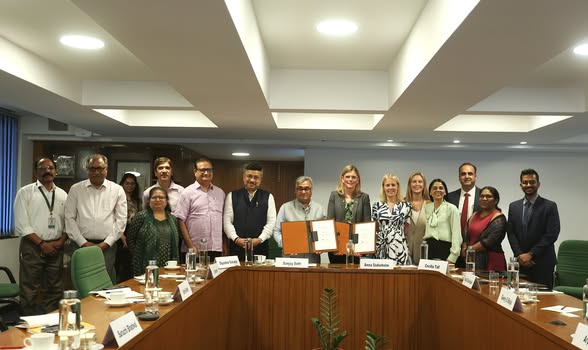
Pic Credit: https://x.com/PMOIndia
The latest figures point to growing activity in a sector that is becoming increasingly important for India’s digital economy. The telecom manufacturing programme is aimed at encouraging companies to produce equipment in the country, strengthen domestic supply chains and improve the global competitiveness of Indian manufacturers.
The scheme has also supported a significant increase in exports. Telecom products worth more than Rs 23,500 crore have been exported, while the programme has contributed to employment for around 32,500 people. As many as 22 new manufacturing units have been established across 10 states, according to the latest data.
For India, the expansion of domestic telecom manufacturing has implications beyond industrial production. Mobile networks, broadband infrastructure and next-generation technologies such as 5G depend on a steady supply of telecom equipment. Building more of this capacity within the country can help create a stronger and more resilient supply chain.
The PLI scheme was introduced to encourage companies to expand manufacturing and investment by linking government incentives to production and sales. In the telecom sector, the focus has been on creating an ecosystem capable of producing a wider range of networking and communications equipment.
The growth is also opening opportunities for smaller businesses and suppliers operating around the main manufacturing companies. As production expands, demand can rise for components, technology services, logistics, testing and other specialised support.
The employment impact is another important part of the programme. Beyond the direct jobs created by manufacturing facilities, a larger telecom ecosystem can support opportunities across engineering, research, maintenance, supply-chain management and other technical fields.
The latest numbers suggest that government support is beginning to translate into actual manufacturing activity, rather than remaining limited to investment commitments.
India is simultaneously working to develop indigenous telecom technologies and expand its capabilities in next-generation communications. A stronger domestic equipment industry can support these efforts by creating greater links between research, technology development and commercial manufacturing.
For consumers, the benefits may not always be immediately visible, but a stronger domestic telecom ecosystem can contribute to more reliable supply chains and faster development of communications infrastructure. For businesses, it can create new opportunities to participate in a growing technology manufacturing sector.
The progress under the telecom PLI scheme comes as India seeks to position itself not only as a major market for digital services but also as a manufacturer and exporter of telecom technology.
With investment, production, exports and employment all showing growth, the scheme is emerging as an important part of India’s broader effort to strengthen domestic manufacturing and build greater technological capability.